It’s exactly 159 days, 21 hours and some odd minutes since the Kenyan government called for the need for us to stay away from public gatherings and essentially #stayathome.
Written a shortie short story/ novella: In the Quiet
Traveled back to my area of work to see to the construction of 4 classrooms , 2-per community school
Gained weight
Started, quit, started, forgot about, started working out.
Consumed at least 3 cups of tea a day/ some days at least 4 cups of coffee
Drank more water
Slept in (and I love sleeping in on Saturdays)
Signed up for online classes: I just quit the one for African Leadership Institution because with over 1,000 participants and the never ending telegram messages, I missed out on signing in and with 5 error messages- I was done!
Got accepted into the New Heights Leadership Program: a 3-month online intensive session that merges both Christian Faith and Leading with Integrity in the modern world.
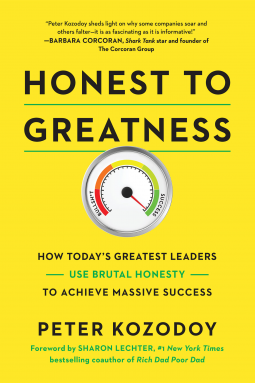
On reading: I just finished reading Honest to Greatness by Peter Kozodoy and he explores how transparency is key to sustaining organizations, companies and our interactions not just with people but also with what we create.
“To get the most out of your people, you must tell them why they matter.”
Status Check: A friend asked me yesterday, on a scale of zero to one hundred, how pissed off are you with the corruption in the Kenyan government? I shot him a look and he simply said “that pissed off?” See, people have been displaced, lost their jobs, their loved ones, our health care workers are at the frontline yet they’re unpaid, without PPE kits and it doesn’t help that the body set in place to regulate all this is busy trading with kits that could save lives. Wouldn’t you lose it if someone was stealing billions meant to ensure your access to health care which you are over taxed for?
On this new WordPress Editor: Yes, I’m learning that free is expensive, because I don’t like it one bit and switching to the Classic Editor means installing it and yes…I’ve got to be on a paid plan to do that. Or maybe I’m just sleepy- who knows, I will look into it when I can, if I hate it…it’s always good to explore options I guess.
I’m looking forward to September! Who knew we’d be this close to ending 2020 when we started out in January?
Have an awesome week. Stay safe. Stay hydrated. Above all choose kindness, we need it.
The story: Kalu, kidnapped from an orphanage at the age of fourteen and trained to pick pockets, is forced into a gang of thieves in Bangalore. When Babu, their ruthless gang leader, murders his best friend Ramesh, Kalu – fearing for his own life – runs away to Kolkata. While still being pursued by Babu he meets and falls in love with Tanya, a stunning and gifted career girl from an upper middle-class family.
Sir, if you ever come across a cobra unexpectedly, my advice is not to stare directly into its eyes.
Oh, I love the ingenuity of this book!
Who would have thought that it’d be in the form of a letter and not just any letter but one addressed to the Prime Minister of India and from a Street Urchin nonetheless. I love Kalu’s honesty and what hurt me most as I read this was how he took me along those streets in India, the hopes of children, the hurt and betrayal they experience at the hands of adults, the corrupt police and I was even angered by how the depiction of politicians in this book rings true for most of those in my country, Kenya. Same goes for the police!
The mode of storytelling is refreshing, for Kalu uses an old Sanyo recorder to talk to the Prime Minister. He admits that having grown up an orphan, first in an orphanage and then in the streets, he never learned to read or write.
Kalu’s charming, naive, sarcastic, hopeful…nostalgic, a hopeless romantic and sometimes, in reading you cannot help but weep for the children out on the streets of India as he depicts them and the lies and neglect that led them there.
Modiji, my Sanyo voice recorder did not start this morning. I had to hammer it several times to wake it up. Hope it lasts to the end of my story. In Japan, they would have thrown it away by now. But, we Indians don’t discard anything easily; we know how to recycle.
Born into a Punjabi family, Anil Nijhawan’s early schooling was in Kolkata, at the infamous (people have contradictory opinions) South Point School. His teacher of English, the charismatic Mr Utpal Dutt, an actor and a scholar of Shakespeare and English literature, instilled in Anil the love of English language at a young age. Anil Nijhawan now lives in the UK with his wife Adarsh and a family of gold fish in the garden pond. His career has embraced working in the computing industry and running his own business.
I had one of those days. The kind where the weight of the world is on your shoulders and nothing seems to make the cloud of sorrow hover farther away from you.
And a colleague at work told me what I often say to her, “look on the bright side…” and I was tempted to bundle her up and throw her in the lake, because there was no bright side, no silver lining, no lesson to be learned…I just wasn’t feeling it and lately it seems like I am spiraling in this web of sorrow, hopelessness and just despair.
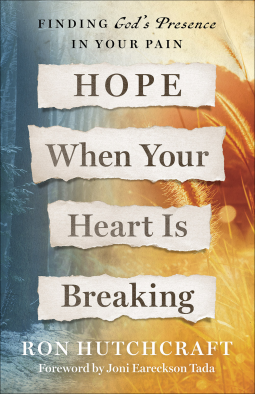
So, reading this book felt like my call for help, because taking a walk wasn’t helping, music was making me cry, and I couldn’t eat or sleep.
The author draws lessons learnt from his life. He shares his loss, grief and how he worked his way into living what he shares in this book and honestly, it was so refreshing to find my pain understood by another simply in him sharing his own hurt.
He expresses this connection better;
People may not want to hear your message. But they will listen to your scars.
He explores grief, faith and what it means to hope against all odds. And now, with what’s happening in the world- reading this felt like someone lighting a flashlight in the dark. What still baffles me about his writing and theme- is the power of choice. He constantly shares that there is a thin line between hurt and healing and that’s the power of choice.
At some point while reading this, I came across this question, he asks:
Is a hammer constructive or destructive?
Yes. It depends on what you do with it.
The publisher states that: Hope When Your Heart Is Breaking is an honest look at both roads, and how your greatest loss can lead to your greatest gain. Author Ron Hutchcraft writes from the deep well of his own devastating loss and grief, and points us to the practical steps that lead to peace and wholeness.
This book is a pathway to hope—a road map through the pain of grief and loss. Be strengthened by a new closeness to others and to God. And make the decisions that lead to comfort, growth, and life.
Truth is, it draws from various texts, stories and instances in the Bible and makes for a comforting read. So, if you’ve lost someone you love, a dream, a part of you, or sometimes you find yourself traveling with a bag of past trauma then, this would be something worth reading.
Loss leads to grief and in grieving we have choices and you too have a choice just like the author says:
The hammer will change you for better or worse. But it’s not the hammer that decides whether hurt or hope wins. We do. By the choices we make.
My take: 4 stars
Am I feeling better? No, I am feeling challenged to do something about this cloud that I can’t shake off and it’s not to look outside of me, but to look inside and to me, right now, that’s way better than anything I had expected when I started reading this book.
I’ll get another cup of tea and continue writing out what’s eating me inside.
My grandmother says that love is like diarrhea, it needs neither an invitation nor privacy. I did not believe her until I met Abubakar and Ishmael.
I did not meet them at once, rather like bouts of diarrhea, they befell me.
We crossed paths and now we seem to be walking together. I know not who is on my right or left but I feel pulled in different directions. I sway like the tree that is blown by the wind, but, my mind, like the roots of a strong tree, is fixed. It is grounded.
Abu a.k.a Abubakar
I was going home after a long day’s week. I walked into the bus station and headed straight to the big, blue and white buses marked “RASASI.” “St. Mary’s, Langa’ta, na Otiende…forty! Forty!”
The tall guy ushered me in. I took my seat nearest the door because I would alight first.
It felt good to be rid of the sun. The sun that dared to walk amongst us humans- as though we were equals.
He saw me. I saw him. He was dressed in maroon from head to toe. He was the same guy who had been calling out to people to board the bus. He had ushered me in. He was the one whose voice I heard, yet never dared to see his face. I did not have the time. He had small black eyes, sharp pointed ears and dry cracked lips. He smiled at me. I was staring. I smiled, just a little for he must have strained to part his lips. I could give him my lip gloss, but guys don’t do gloss. Besides my grandmother always says not to initiate contact unless it is warranted.
Fire keeps burning whether you touch it or not. You only get burned when you are stupid enough to reach out and touch it. I could feel dry cracked lips eyes on me. I turned to look and he smiled again. I was pleasant and the next thing he did was hand me his phone. His number being sealed, he asked for mine.
I keyed in one of my numbers. What harm could it do sharing my number with dry cracked lips?
He smiled, and then called immediately.
“Hi.”
“Hi.”
“You are beautiful.”
“Thanks.”
I hang up, not because he said I was beautiful- but because he dared tell me what I already knew. Couldn’t he be more clueless? What if he said it softly? It would still make no difference because it was not warranted.
As the bus pulled out of the station, I thought to myself how foolish I had acted. What had caused my actions? Hormones, impulse, time or folly? I could not tell, but now some guy with dry cracked lips named Abubakar had my number.
He said ‘call me Abu,’ and I thought of Abu- the monkey in Aladdin and smiled. I was foolish, but even fools can be redeemed can’t they?
It’s 1:05AM as I type this and no, I do not suffer from insomnia.
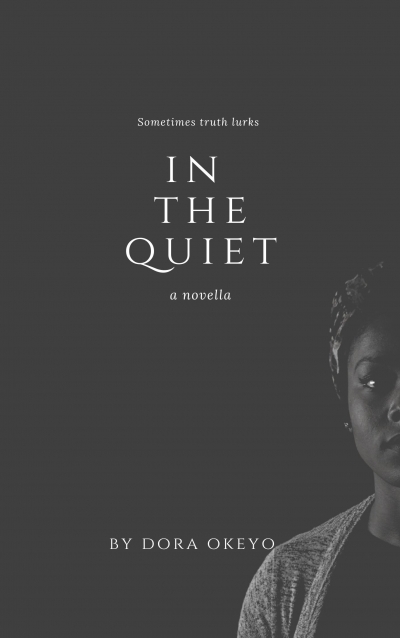
Occasionally maybe, but here’s why I’m up, I’d like to share a sample of my book, In the Quiet, with you for free.
Yes, you don’t have to pay anything, however, your decision to read this, click the link and download a free 3-page sample, is more precious than I could ever explain.
So, forget me…click the link below and enjoy this sneak peek of ‘In the Quiet.’
My name is Martha, just like Mary’s sister in the Bible, my parents went to church. In that building on Sunday they were Christians and as soon as we left it, they were the Abakuria.
When my sister, Abigail, was nine years old she went out in the night with praises from our aunts and parents that she would be a strong, beautiful and confident Kuria woman and she never came back.
I was seven then.
They could not touch me because among our people there are some things that are unholy or considered bad luck and it’s odd that seven is what we call an unlucky number.
We had one leg in our ways and the other in Christianity; one deemed the number seven unlucky and the other holy.
I kept asking after Abigail until one time the answer I received was a slap, then two more after that, and when I was beaten and thrown out into the cold, then I too knew that it was time to stop asking for the dead, especially at night.
When I turned eight, my mother’s younger sister came to visit us from the city, and they kept me from her for three days. She was unclean, not a woman, an outcast because she too had refused to let them take her into the night and cut her.






 nilichoandika